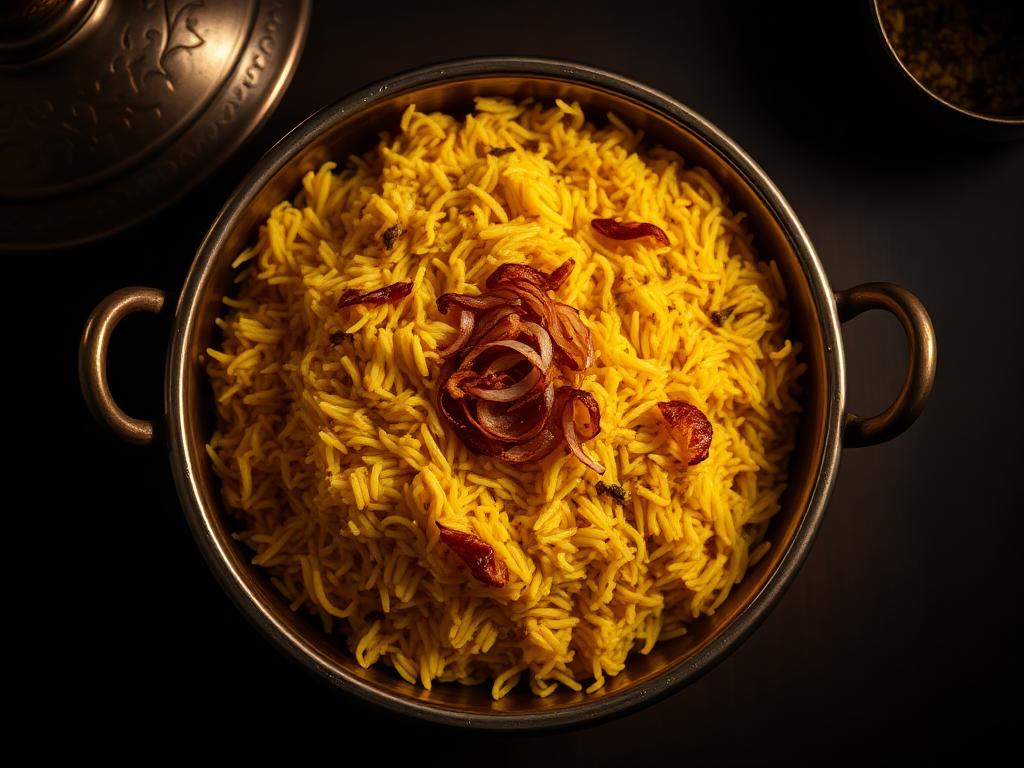
Punjabi Wadi Pulao
Aromatic rice cooked with sun-dried lentil dumplings and whole spices.
About this dish
This pulao is a rustic winter staple, highlighting 'Amritsari Wadis'—sun-dried, fermented lentil nuggets spiked with black pepper and spices. These wadis provide a meaty texture and an intense umami depth that permeates the long-grain Basmati rice. It is a celebratory dish often made when fresh vegetables are scarce or when a hearty, one-pot meal is desired.
Ingredients
Rice and Wadis
- 2 cups (400g) Long-grain Basmati rice, soaked for 30 mins
- 2 large Amritsari Wadis, broken into bite-sized pieces
- 3.5 cups Water or vegetable stock
- 3 tbsp Ghee
Whole Spices and Aromatics
- 1 tsp Cumin seeds
- 1 Black cardamom
- 2 Green cardamoms
- 1 inch Cinnamon stick
- 4 Cloves
- 2 Medium onions, thinly sliced
- 1 tbsp Ginger-garlic paste
- 2 Green chillies, slit
Seasoning
- 1 tsp Red chilli powder
- 1/2 tsp Turmeric powder
- Salt to taste
- Handful of fresh mint and coriander leaves
Method
- 1
Frying the wadis
Heat 1 tablespoon of ghee in a heavy pot. Add the broken wadi pieces and fry on low-medium heat for 2-3 minutes until they turn a dark golden brown and become fragrant; remove and set aside, ensuring they don't burn as they turn bitter quickly.
- 2
Tempering the ghee
In the same pot, add the remaining ghee. Once hot, add cumin seeds, black cardamom, green cardamom, cinnamon, and cloves; wait for the spices to crackle and release their oils into the fat.
- 3
Browning the onions
Add the sliced onions and sauté on medium heat for 8-10 minutes. The onions must reach a deep caramel-brown color (Biryani style) to provide the characteristic color and sweetness to the pulao.
- 4
Aromatic infusion
Stir in the ginger-garlic paste and slit green chillies. Sauté for 2 minutes until the raw pungent aroma of garlic is replaced by a mellow, toasted scent.
- 5
Spice integration
Add the turmeric and red chilli powder along with a splash of water to prevent burning. Cook for 1 minute until the oil starts separating from the masala base.
- 6
Toasting the rice
Drain the soaked rice thoroughly and add it to the pot. Gently sauté the rice with the masala for 2 minutes, ensuring each grain is coated in ghee; be careful not to break the fragile soaked grains.
- 7
Simmering
Add the fried wadis back into the pot along with 3.5 cups of water and salt. Bring to a rolling boil on high heat.
- 8
The Dum process
Once the water level drops to the surface of the rice, cover with a tight lid. Reduce heat to the lowest setting and cook for 10-12 minutes without opening the lid.
- 9
Fluffing
Turn off the heat and let the pulao rest for 10 minutes. Use a fork to gently fluff the rice, mixing the softened wadis and caramelized onions evenly throughout.
Notes & variations
- Wadis are very salty; adjust the added salt accordingly after tasting the water.
- Always soak Basmati rice for at least 30 minutes for long, separate grains.
- If wadis are too hard, you can pressure cook them for 1 whistle before adding to rice.
- Store wadis in an airtight container to prevent them from going rancid due to the lentil fats.
Serve with
Cool Boondi Raita and a side of spicy mango pickle.
Cook's note
Fry the wadis in ghee rather than oil to unlock the maximum depth of the sun-dried spices within them.