Shenga Chutney Pudi
Dry peanut spice mix, a staple condiment in North Karnataka.
About this dish
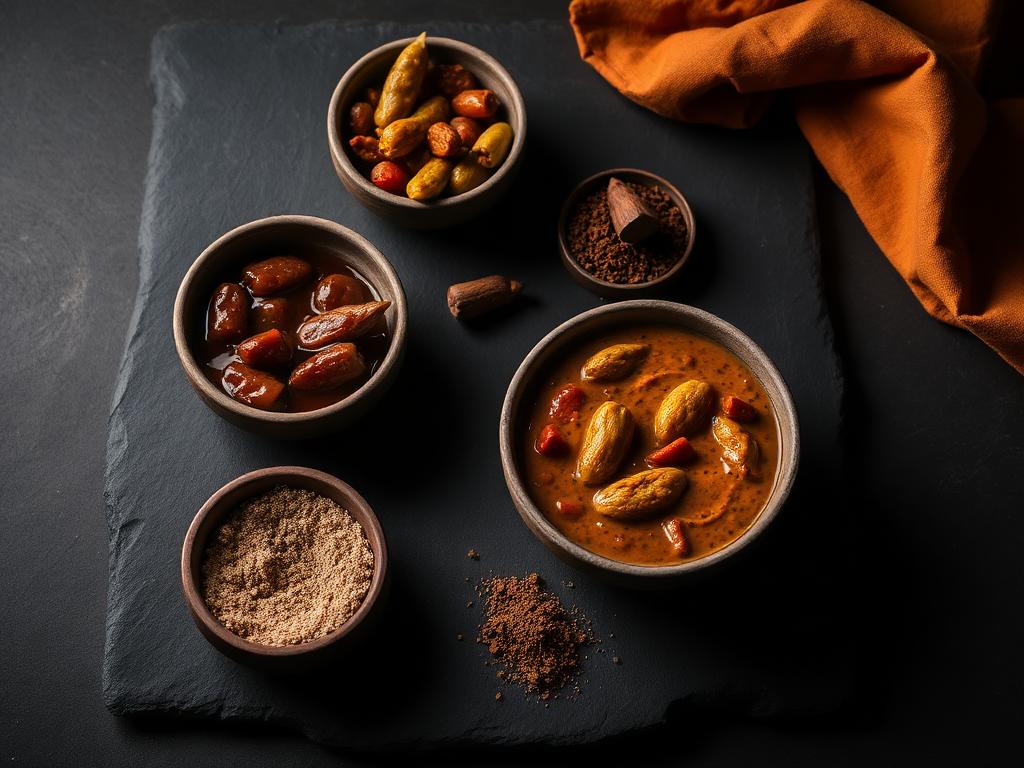
Shenga Chutney Pudi is the soul of North Karnataka cuisine, hailing from the dry belts of Dharwad and Belgaum. This shelf-stable peanut spice mix is a savior for travelers and students, offering a perfect balance of smoky, nutty, and spicy notes. Unlike many other chutneys, this version is intentionally coarse and dry, traditionally pounded in a stone mortar and pestle to release the peanut oils naturally.
Ingredients
Main Ingredients
- 2 cups (250g) Raw peanuts (groundnuts)
- 1/2 cup (50g) Byadagi dried red chilies (for color and mild heat)
- 1/4 cup (30g) Garlic cloves, unpeeled and slightly crushed
- 2 tablespoons Cumin seeds (jeera)
- 2 tablespoons White sesame seeds
- 1 small ball (size of a marble) Tamarind, cleaned of seeds and fibers
- 1.5 teaspoons Salt or to taste
- 1/2 teaspoon Jaggery powder (optional, for balance)
For Roasting
- 1 teaspoon Peanut oil or coconut oil
Method
- 1
Roasting the peanuts
Heat a heavy-bottomed iron kadai over medium-low heat. Add the raw peanuts and dry roast them patiently for 8-10 minutes, stirring constantly until the skins darken and they start to crackle. The peanuts must be crunchy to the core; check by cooling one and biting into it.
- 2
Cooling and skinning
Transfer the roasted peanuts to a flat plate and let them cool completely. Once cool, rub them between your palms to remove the skins. You can leave some skins on for a rustic texture and extra fiber.
- 3
Roasting the chilies
In the same kadai, add a few drops of oil and roast the Byadagi chilies on low heat. Roast until they puff up and turn a bright deep red, ensuring they don't turn black or charred. Remove and set aside.
- 4
Toasting aromatics
Add cumin seeds and sesame seeds to the warm pan. Toast for 30-45 seconds until the cumin is fragrant and the sesame seeds start to pop. Immediately transfer to a plate to prevent burning.
- 5
Dehydrating the garlic
Add the crushed garlic cloves to the warm pan for 1 minute just to remove the raw moisture. Do not brown them; we only want to ensure the chutney doesn't spoil due to garlic moisture.
- 6
Preparing the tamarind
Tear the tamarind into very small bits. If it is very soft, roast it for 30 seconds to dry it out slightly, making it easier to blend into a powder.
- 7
Primary blending
In a dry blender jar, first pulse the roasted red chilies, cumin, sesame seeds, tamarind, and salt until they form a coarse powder. This ensures the spices are evenly distributed.
- 8
Adding peanuts and garlic
Add the roasted peanuts, jaggery, and the slightly warmed garlic to the blender. Use the pulse function in short 2-3 second bursts. Do not run the blender continuously, or the peanuts will release too much oil and turn into peanut butter.
- 9
Final texture check
The final result should be a coarse, crumbly powder where you can still see tiny bits of peanut. Taste and adjust salt or jaggery if necessary. The color should be a vibrant reddish-orange.
- 10
Airing and storage
Spread the powder on a wide plate for 20 minutes to let any residual heat escape. Store in a clean, airtight glass jar. It stays fresh for up to 2 months at room temperature.
Notes & variations
- Byadagi chilies are essential for the deep red color without excessive heat; if using Guntur chilies, reduce quantity by half.
- For a vegan version, ensure the jaggery used is processed without bone char, which is standard in India.
- Always use 'hand-pulse' mode on your blender to achieve the grainy 'Pudi' texture.
- If you like a more pungent flavor, increase the garlic count but ensure it's well-warmed to prevent spoilage.
Serve with
Serve with Jolada Rotti (sorghum flatbread), Curd rice, or over a hot ghee-laden Masala Dosa.
Cook's note
Adding a few curry leaves during the roasting of chilies adds an extra layer of herbal fragrance to the mix.