Tabak maaz Recipe
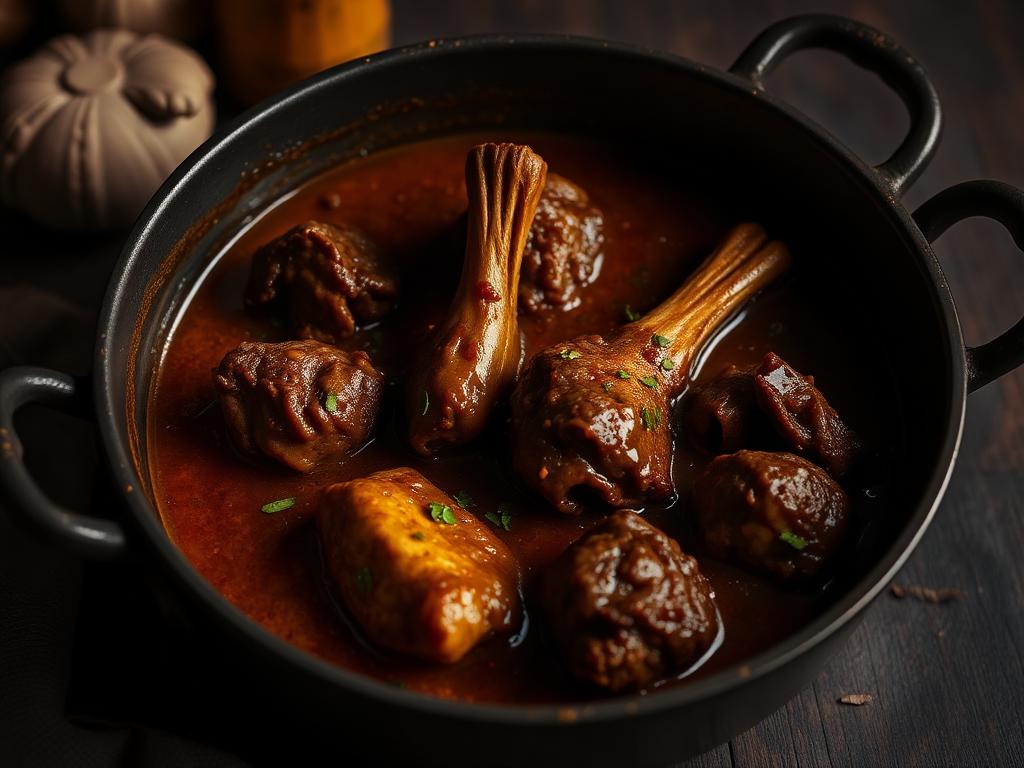
Wazwan lamb ribs, gently simmered and shallow-fried to a crisp finish.
About this dish
Tabak maaz is a prized rib preparation in Kashmiri Muslim Wazwan cooking. Rib sections are first cooked until tender, then fried so the exterior contrasts with the soft meat and fat beneath. Related rib dishes appear in Kashmiri Pandit cooking, notably kabargah, though names and methods should not be treated as identical. Tabak maaz is commonly arranged on a shared platter during wedding feasts.
Ingredients
Ribs
- 1.2 kg lamb breast ribs, cut into 8 flat sections with the fat attached
- 10 g fine salt (about 1 2/3 tsp)
Aromatic cooking liquid
- 720 ml water (3 cups)
- 480 ml whole milk (2 cups)
- 6 g ground fennel (1 tbsp)
- 2 g ground dry ginger (1 tsp)
- 1 g ground turmeric (1/2 tsp)
- 2 g cinnamon stick (one 5 cm piece)
- 1 g black cardamom (1 pod)
- 0.7 g green cardamom (4 pods)
- 0.5 g cloves (5 whole)
- 2 g dried bay leaves (2 large leaves)
For shallow-frying
- 100 g ghee (about 1/2 cup)
Method
- 1
Prepare even rib sections
Inspect the ribs for loose bone fragments and wipe them clean, allowing about 5 minutes. Trim dangling scraps but retain the broad layer of fat that will crisp during frying. Keep the meat chilled while you assemble the cooking liquid, and do not apply heat yet.
- 2
Start the aromatic broth
Put the water, cinnamon, both cardamoms, cloves and bay leaves in a broad heavy pot. Bring to a simmer over medium heat for 5 minutes, until the whole spices smell fragrant. Add the salt, fennel, dry ginger and turmeric and stir for 30 seconds.
- 3
Add the ribs and milk
Lay the ribs in the pot as evenly as possible and pour in the milk. Heat over medium-low heat for 5–7 minutes, watching closely as foam begins to gather around the edges. Reduce the heat before the milk rises or boils vigorously.
- 4
Simmer gently
Partially cover and cook over low heat for 35 minutes, maintaining a quiet simmer. Turn the sections once after about 20 minutes and scrape the base gently to prevent the milk solids from sticking. The meat should soften while remaining securely attached to the bones.
- 5
Check tenderness carefully
Continue simmering over low heat for 10–15 minutes, checking a thick section with a skewer. It should slide through the meat with little resistance, but the rib sections must still lift out intact. If the liquid reduces too rapidly, cover more closely rather than increasing the heat.
- 6
Drain and dry
Lift the ribs onto a rack set over a tray and let them drain off the heat for 10 minutes. Remove any whole spices clinging to the surface and blot away visible moisture with kitchen paper. The surface should feel dry enough to fry without excessive spluttering.
- 7
Heat the frying fat
Melt the ghee in a wide, heavy frying pan over medium heat for 2–3 minutes. Place half the ribs in the pan with the broad fatty side down, leaving space between sections. The ghee should sizzle steadily rather than smoke or spit violently.
- 8
Fry to a crisp crust
Fry each batch for 5–6 minutes on the fatty side, then turn and cook for 3–4 minutes on the other side. Keep the heat medium to medium-low so the fat renders and the surface becomes deep golden without burning. Remove the first batch to a rack and repeat with the remaining ribs.
- 9
Drain briefly and serve
Rest the fried ribs on the rack for 2 minutes, uncovered and away from the heat. Their exterior should remain crisp, with tender meat underneath and no wet coating. Serve immediately rather than covering them, because trapped steam softens the crust.
Notes & variations
- Cup measures use a 240 ml cup; the ghee quantity is for shallow-frying and will not all be absorbed.
- Ask for breast or rib sections with a broad fatty surface, not neatly trimmed individual lamb chops.
- Tabak maaz does not require breadcrumbs, flour or a batter; its crust comes from the meat and fat themselves.
- Milk is used in this household version of the simmering liquid; Wazwan cooks also prepare the ribs in seasoned water or stock.
Serve with
Steamed rice and other Wazwan dishes, with a sharp radish chutney to contrast the rich ribs.
Cook's note
Dry the cooked ribs thoroughly before frying; surface moisture is the main obstacle to a crisp, evenly golden finish.