Talawa Gosht
Crunchy, succulent fried mutton, a quintessential Deccani breakfast side.
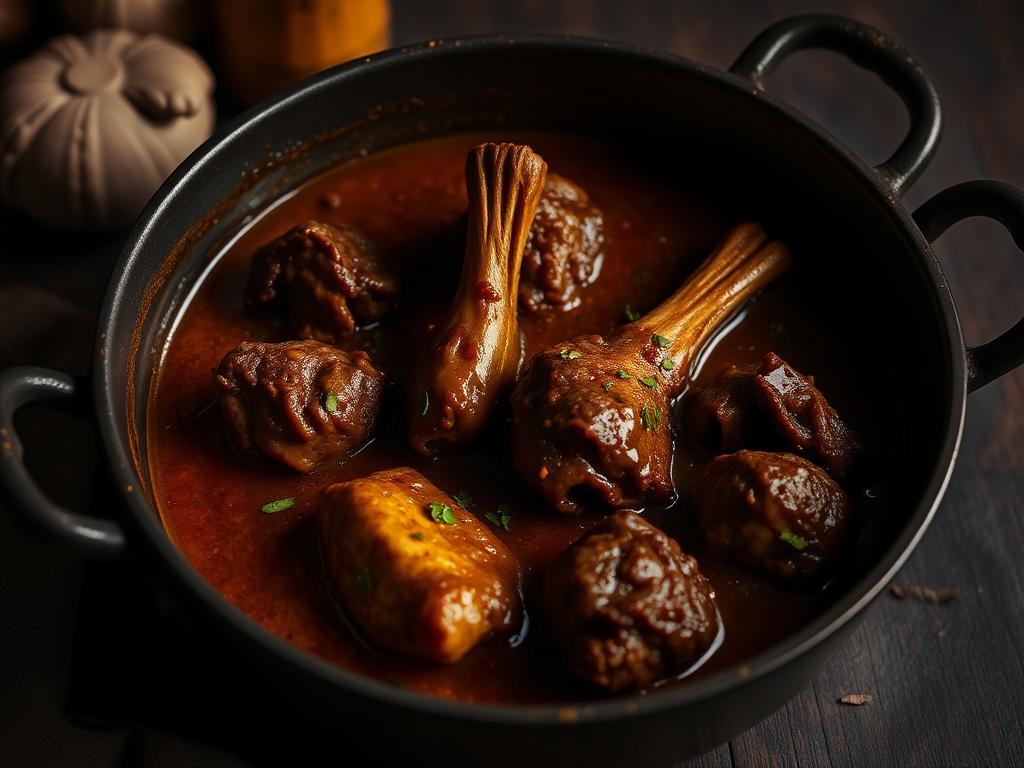
About this dish
Talawa Gosht is the soul of a Hyderabadi 'Chakna' or breakfast spread, traditionally paired with Khatti Dal. Unlike generic fried mutton, this Deccani specialty involves a dual process of pressure cooking until tender and then searing in its own fats until the exterior develops a dark, crusty char. It is distinct for its heavy use of curry leaves and ginger-garlic paste, reflecting the fusion of Mughal influence and local Telugu spice preferences.
Ingredients
The Meat & Marinade
- 500g mutton (goat meat), bone-in or boneless cubes
- 1.5 tbsp ginger-garlic paste, freshly pounded
- 1 tsp salt
- 1/2 tsp turmeric powder
- 1 tsp red chili powder (Kashmiri or Deccani blend)
- 1/2 cup water
The Searing Aromatics
- 4 tbsp vegetable oil or ghee
- 3-4 green chilies, slit lengthwise
- 20-25 fresh curry leaves
- 1 tsp black pepper powder, freshly ground
- 1/2 tsp garam masala powder
- 1/4 cup fresh coriander leaves, chopped
- 1 lemon, halved for finishing
Method
- 1
Pressure Cooking the Meat
In a pressure cooker, combine the mutton, ginger-garlic paste, salt, turmeric, and red chili powder with 1/2 cup of water. Secure the lid and cook on high heat for 3-4 whistles, then reduce to low heat for 10 minutes until the meat is 90% tender. The meat should be soft but not falling off the bone yet.
- 2
Reducing the Liquid
Release the pressure manually and open the lid; if there is excess water, turn the heat to high and sauté until the water evaporates and a thick masala paste coats the meat. This 'bhuna' stage ensures all the flavor is concentrated into the fibers before frying.
- 3
Preparing the Frying Pan
Heat 4 tablespoons of oil in a wide, heavy-bottomed iron kadai or skillet over medium-high heat. Using iron is traditional as it helps achieve the characteristic dark, crusty exterior without sticking.
- 4
The Initial Sear
Add the cooked mutton and the residual masala to the hot oil. Spread the pieces out in a single layer and let them sear undisturbed for 2-3 minutes until the bottom side turns deep brown.
- 5
Adding Aromatics
Toss in the slit green chilies and fresh curry leaves. The curry leaves should crackle and become translucent, infusing the oil with their nutty aroma which is the hallmark of Hyderabadi cuisine.
- 6
Developing the Crust
Continue to fry the meat for another 8-10 minutes, stirring occasionally. You want the edges to become crispy and slightly blackened (talawa) while the inside remains succulent and juicy.
- 7
Final Spice Infusion
Sprinkle the freshly ground black pepper and garam masala over the meat. Stir rapidly for 60 seconds; do not let the dry spices burn, but allow them to toast in the hot oil.
- 8
Garnishing
Add the chopped coriander leaves and give it a final mix. The heat from the pan will wilt the greens and release their oils into the meat crust.
- 9
Resting and Serving
Turn off the heat and squeeze half a lemon over the pan. Let it sit for 2 minutes to allow the juices to redistribute before plating.
Notes & variations
- Use meat from the shoulder (raan) for the best fat-to-meat ratio and tenderness.
- If using boneless meat, cut into small 1-inch cubes to maximize the surface area for frying.
- Store leftovers in the fridge for up to 3 days; reheat in a pan, not a microwave, to retain crispness.
- Adjust green chilies based on your spice tolerance; Hyderabadi food is traditionally quite spicy.
Serve with
Serve hot with Khatti Dal, steamed rice, or soft roomali rotis.
Cook's note
Do not skip the curry leaves; they provide the essential 'earthy' counterpoint to the heavy meat flavors.