Tandoori Bhatta Mutton
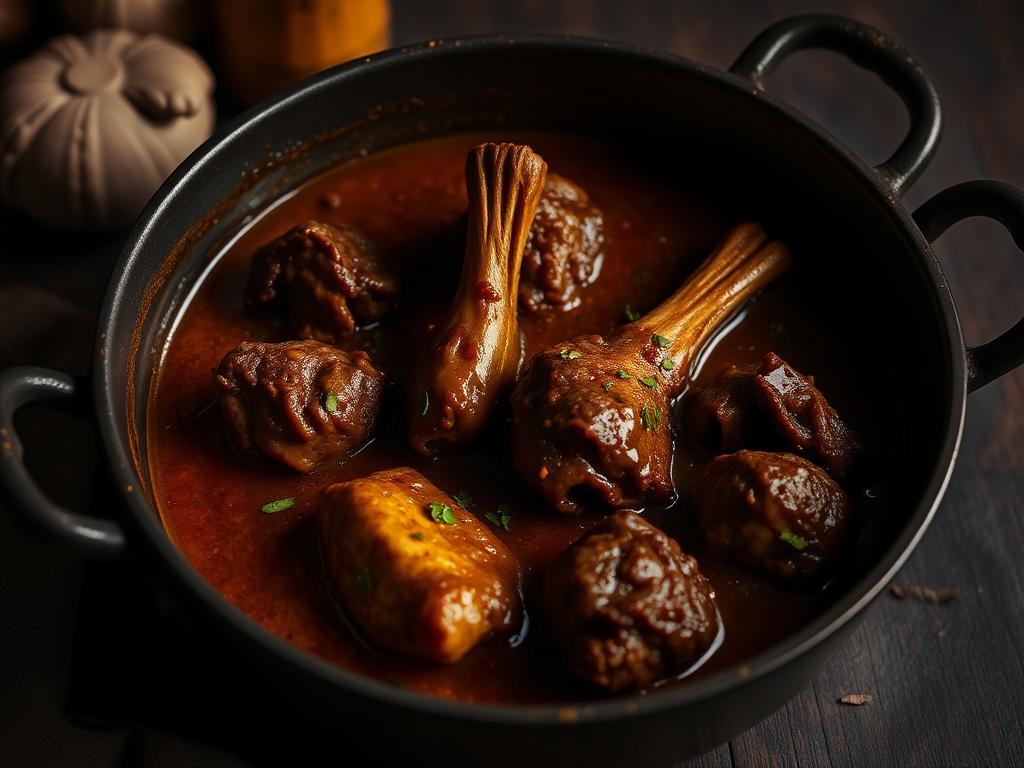
Slow-cooked mutton pieces marinated in mustard oil and charred over coal.
About this dish
Bhatta refers to the open coal kilns or furnaces used in the Punjab region. This mutton dish is a rustic, smoky preparation that relies on the quality of the meat and the intense heat of wood charcoal. Unlike creamy Mughlai curries, this is a dry-rubbed, oil-basted preparation that celebrates the marriage of pungent mustard oil and charred animal fat, typically eaten by farmers and hunters after a long day.
Ingredients
The Meat and First Marinade
- 800g Mutton (goat meat), cut into 2-inch chunks (mix of chops and shoulder)
- 2 tbsp Raw papaya paste (with skin, for tenderizing)
- 1 tbsp Ginger-garlic paste
- 1 tsp Salt
- Juice of 1 Lemon
The Second Marinade
- 1/2 cup Mustard oil (kacchi ghani)
- 2 tbsp Degi Mirch (Paprika/Chili blend for color)
- 1 tsp Black peppercorns, coarsely crushed
- 1 tsp Roasted cumin powder
- 1/2 tsp Garam masala
- 1 tbsp Dried Fenugreek leaves (Kasoori Methi), toasted and crushed
For Basting
- 1/4 cup Melted Ghee
- 1 tsp Chaat masala
Method
- 1
Initial Tenderizing
Clean the mutton and pat it completely dry with paper towels. Rub the meat thoroughly with the raw papaya paste, ginger-garlic paste, salt, and lemon juice. Let it marinate for at least 45 minutes; the enzymes in the papaya will break down the tough muscle fibers of the goat meat.
- 2
Prepare the Oil Infusion
In a small bowl, whisk the mustard oil with Degi Mirch until the oil turns a bright, vibrant red. This technique, known as 'Roghan', ensures the color penetrates deep into the meat without using artificial dyes.
- 3
Second Marinade Application
Add the peppercorns, cumin, garam masala, and kasoori methi to the oil mixture. Coat the tenderized mutton pieces in this thick, pungent oil-based marinade. Massage each piece well and let it rest for another 30 minutes at room temperature.
- 4
Prepare the Bhatta (Coal Grill)
Light your charcoal grill and wait until the flames die down and the coals are glowing orange-white with a thin layer of grey ash. The heat must be intense but indirect to avoid burning the outside before the inside is cooked.
- 5
Skewering the Meat
Thread the mutton pieces onto thick metal skewers. Leave a half-inch gap between each piece to ensure the heat circulates evenly and browns the edges. Do not pack them too tightly.
- 6
The First Sear
Place the skewers over the hot coals. Sear for 5-6 minutes, turning frequently. The mustard oil will drip onto the coals, creating smoke that flavors the meat—this is the 'Bhatta' essence.
- 7
Basting for Succulence
Once the meat starts to brown, begin basting with melted ghee using a brush. This prevents the mutton from drying out and creates a beautiful lacquered finish. Continue grilling for another 15-20 minutes, depending on the tenderness of the meat.
- 8
Final Char and Rest
Move the skewers to the hottest part of the grill for the last 2 minutes to achieve localized charring. Remove from heat and let the meat rest on the skewers for 5 minutes; this allows the juices to redistribute, ensuring every bite is moist.
Notes & variations
- Raw papaya paste is essential for mutton; without it, the meat will be chewy and tough.
- If you don't have a charcoal grill, use an oven at 240°C with a coal-smoking (Dhuanr) step at the end.
- Mustard oil provides a heat and pungency that vegetable oil cannot replicate.
- Always use bone-in meat for better flavor and juiciness during high-heat cooking.
Serve with
Serve with sliced red onions, a wedge of lime, and mint-yogurt chutney.
Cook's note
To check doneness, press the meat; it should be firm but have a slight 'give'. If it's hard, it's overcooked.