Tholappam
A paper-thin, lace-like crepe from the Muslim community of Kilakarai.
About this dish
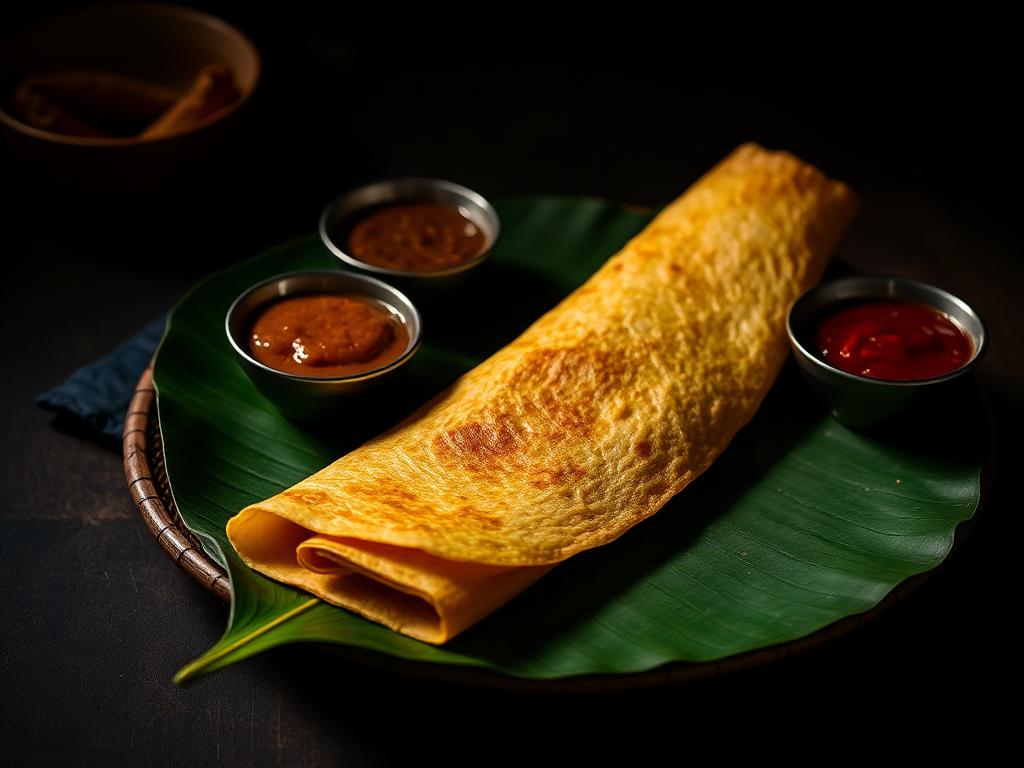
Originating from the Lebbai Muslim community of Kilakarai and the coastal Pearl Fishery Coast, Tholappam is an incredibly thin, translucent crepe. It is traditionally prepared for breakfast or as a nourishing snack for new mothers due to its easy digestibility. Its name, derived from 'thol' (skin), signifies its paper-thin texture, achieved through a unique batter consistency and a specific swirling technique on a heavy iron griddle.
Ingredients
The Batter
- 200g (1 cup) Raw Rice (Sona Masuri or Ponni)
- 50g (1/4 cup) Urad Dal (split black gram)
- 1/2 teaspoon Fenugreek seeds (methi)
- 200ml (1 cup) Thin Coconut Milk
- 1/2 teaspoon Sea salt
- Water for soaking
Cooking and Finishing
- 2 tablespoons Gingelly oil (Sesame oil) for seasoning the pan
- 1 Egg white (optional, for structure)
- 1 tablespoon Ghee for drizzling
Method
- 1
Soaking the Grains
Wash the raw rice, urad dal, and fenugreek seeds thoroughly under cold running water until the water runs clear. Soak them together in plenty of water for at least 4 hours. Proper soaking ensures the rice breaks down into a silky, grit-free paste.
- 2
Grinding the Base
Drain the soaking water and transfer the grains to a wet grinder or high-speed blender. Add a small splash of water and grind for 20-25 minutes until the batter is exceptionally smooth and light. The batter must be finer than standard dosa batter, feeling like velvet between your fingers.
- 3
Adjusting Consistency
Transfer the thick paste to a mixing bowl and gradually whisk in the thin coconut milk and salt. If using egg white for extra elasticity, whisk it in now. The final consistency should be watery, similar to heavy cream but pourable, allowing it to spread instantly.
- 4
Seasoning the Tawa
Heat a heavy-bottomed cast iron tawa or a flat non-stick griddle on medium-high heat. Rub a cut onion dipped in gingelly oil over the surface; this creates a natural non-stick layer and adds a faint aroma.
- 5
The Pouring Technique
Reduce heat to medium. Pour a large ladleful (about 1/2 cup) of batter into the center of the pan. Immediately lift the pan and tilt it in a circular motion to spread the batter to the edges, creating a lace-like periphery.
- 6
Steaming and Setting
Cover the pan with a tight-fitting lid immediately after swirling. The steam trapped inside cooks the top of the crepe while the bottom sets without browning significantly. Let it cook for 45-60 seconds.
- 7
Visual Cues for Doneness
Remove the lid when the edges start to lift slightly and the center looks opaque and dry. Unlike a dosa, a Tholappam should remain white and soft, not crispy or golden brown. It should be pliable like a handkerchief.
- 8
Removing the Crepe
Use a thin silicone or metal spatula to gently lift the edges. Slowly peel the crepe off the griddle in one piece. If it tears, the batter might be too thin or the pan not seasoned enough.
- 9
Folding and Stacking
Fold the Tholappam into quarters (a triangle) while still hot. Stack them inside an insulated container lined with a cloth to keep them moist and soft. Do not stack them flat while steaming hot as they will stick together.
Notes & variations
- If the crepes are too brittle, add two tablespoons of cooked rice while grinding the batter.
- Traditional Kilakarai homes use a 'Tholappam Chatti', a specific shallow clay pot, for a superior smoky aroma.
- The batter does not require long fermentation; 1 hour of resting is sufficient for the flavors to meld.
- For a vegan version, ensure you omit the egg white; the coconut milk provides enough fat for elasticity.
Serve with
Serve hot with Mutton Chaap, sweetened coconut milk, or a spicy tomato-garlic chutney.
Cook's note
The secret is the 'watery' consistency—if the batter is thick, it will become a thick pancake rather than a skin-like crepe.