Tirunelveli Pulinkari
A tangy and coconut-based vegetable stew with roasted spices.
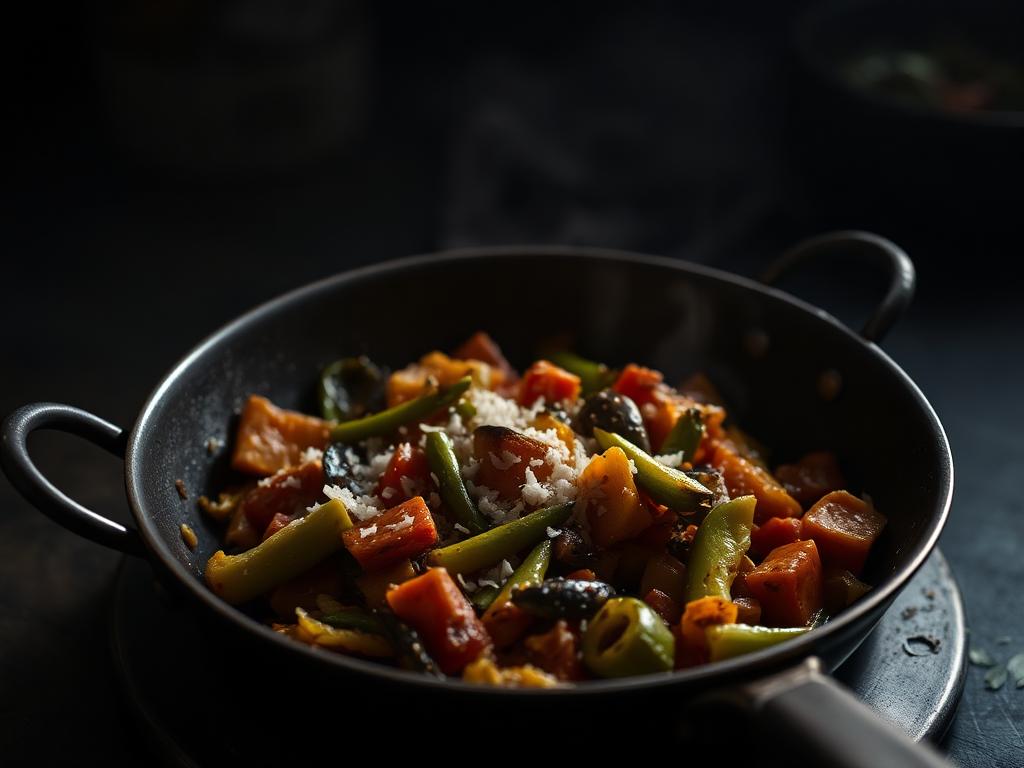
About this dish
Hailing from the southern banks of the Thamirabarani river, Tirunelveli Pulinkari is a quintessential Brahmin feast dish that balances sourness and spice. Unlike regular sambar, it uses a unique roasted coconut and spice paste that gives it a thick, grainy texture and dark brown hue. It is traditionally served during weddings and festivals, specifically paired with a simple kootu or potato fry.
Ingredients
Vegetables and Base
- 200g Ash Gourd (Ven Poosani), cubed into 1-inch pieces
- 1 large Drumstick (Murungakkai), cut into 2-inch pieces
- 30g Tamarind, soaked in 400ml warm water
- 1/2 tsp Turmeric powder
- 1 tsp Salt, or to taste
- 1 sprig Curry leaves
Pulinkari Masala Paste
- 1/2 cup Fresh coconut, grated
- 3 Dry red chillies (Guntur variety)
- 1 tbsp Coriander seeds
- 1/2 tsp Fenugreek seeds (Methi)
- 1 tsp Coconut oil for roasting
Tempering
- 2 tsp Coconut oil
- 1 tsp Mustard seeds
- 1/2 tsp Fenugreek seeds
- 2 Dry red chillies, halved
- 1/4 tsp Asafoetida (Hing)
Method
- 1
Roasting the spices
Heat 1 tsp coconut oil in a small pan over medium-low heat. Add coriander seeds, red chillies, and fenugreek seeds; roast until the fenugreek turns golden brown and the coriander emits a nutty aroma. Be careful not to burn the fenugreek as it will turn the dish bitter.
- 2
Browning the coconut
In the same pan, add the grated coconut. Stir-fry constantly for 4-6 minutes until the coconut turns a rich, deep golden brown. This 'browning' is crucial for the authentic dark color and toasted flavor of Pulinkari.
- 3
Grinding the paste
Allow the roasted spices and coconut to cool completely. Grind in a mixer with 2-3 tablespoons of water to a very smooth, thick paste; set aside.
- 4
Extracting tamarind juice
Squeeze the soaked tamarind to extract 2 cups of juice, discarding the pulp and seeds. Ensure there are no fibers remaining in the liquid.
- 5
Cooking the vegetables
In a heavy-bottomed pot, combine the ash gourd, drumsticks, tamarind water, turmeric, and salt. Bring to a boil over medium-high heat.
- 6
Simmering for tenderness
Reduce heat to medium, cover, and cook for 10-12 minutes. The vegetables should be tender but not mushy; the ash gourd should look translucent.
- 7
Incorporating the masala
Add the ground coconut paste to the boiling vegetables. Stir well to ensure no lumps remain and the paste is fully integrated.
- 8
Thickening the stew
Simmer the mixture for another 5 minutes on low heat. The gravy will thicken significantly as the coconut releases its oils; look for small bubbles breaking the surface.
- 9
Preparing the tadka
In a small tempering pan, heat 2 tsp coconut oil. Once shimmering, add mustard seeds and let them crackle completely before adding fenugreek seeds, red chillies, and hing.
- 10
Final seasoning
Pour the hot tempering over the Pulinkari and immediately cover with a lid for 2 minutes to trap the aromas. Serve hot.
Notes & variations
- Use only coconut oil for an authentic Kerala-border Tamil flavor profile.
- Yellow pumpkin (Parangikai) can be used instead of ash gourd for a sweeter note.
- Ensure the coconut is roasted to dark brown, not black, to avoid a burnt taste.
- Leftovers taste better the next day as the vegetables absorb the tangy tamarind.
Serve with
Steamed ponni rice and a side of crispy Urulai Kizhangu (Potato) Roast.
Cook's note
Adding a small piece of jaggery at the end balances the intense tanginess of the tamarind.