Vangi Bhath
Vangi Bhath is a beloved rice dish from the Mysore-Bangalore region, historically associated with the Madhwa Brahmin community.
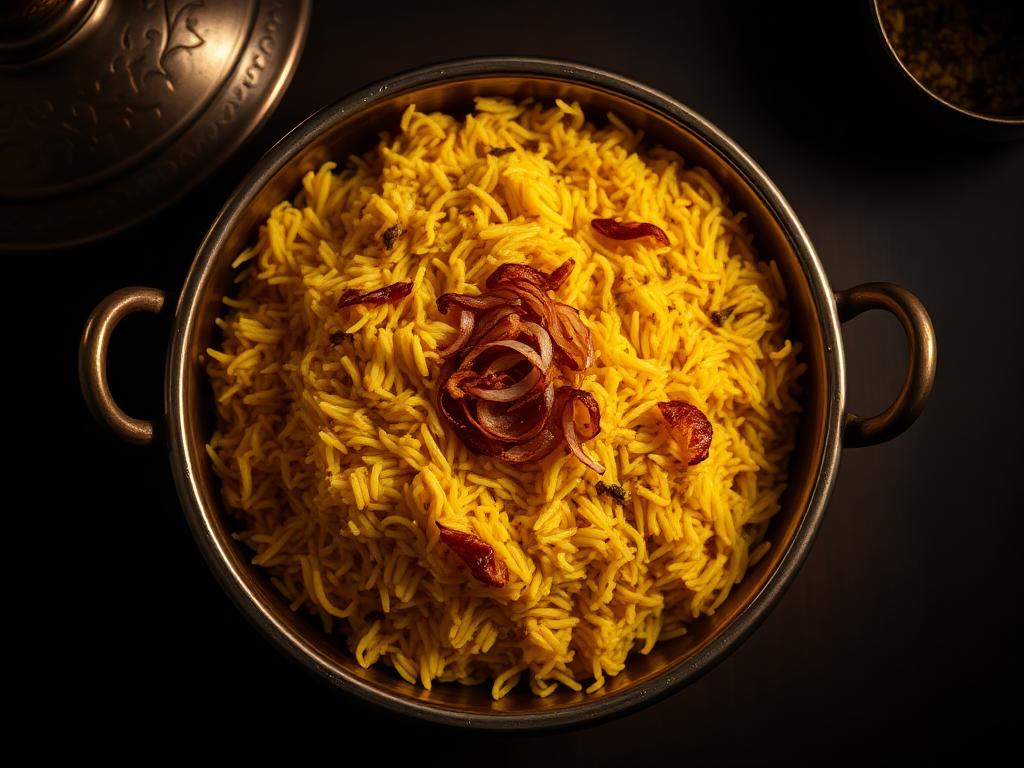
About this dish
Vangi Bhath is a beloved rice dish from the Mysore-Bangalore region, historically associated with the Madhwa Brahmin community. Its defining feature is the 'Vangi Bhath Pudi', a complex spice blend containing Marati Moggu (kapok buds) which lends a unique woody aroma. Typically served at weddings and festivals, it uses the slender 'Sona Masuri' rice rather than Basmati to maintain a distinct, slightly chewy texture.
Ingredients
The Rice
- 200g (1 cup) Sona Masuri rice, washed and soaked for 20 minutes
- 450ml (1.9 cups) Water
- 1/2 tsp Salt
- 1 tsp Ghee
Vangi Bhath Pudi (Spice Mix)
- 2 tbsp Coriander seeds
- 1 tbsp Chana dal
- 1/2 tbsp Urad dal
- 4-5 Dried Byadagi chillies (for color)
- 2-3 Dried Guntur chillies (for heat)
- 1 inch Cinnamon stick
- 2-3 Marati Moggu (Kapok buds)
- 1 tsp Desiccated coconut (dry copra)
The Vegetable Base
- 250g Brinjals (small green striped or purple), slit into long wedges
- 3 tbsp Peanut oil or Coconut oil
- 1/2 tsp Mustard seeds
- 1 tsp Split urad dal
- 10-12 Cashew nuts, halved
- 1/4 tsp Turmeric powder
- 1 tbsp Tamarind paste
- 1 tsp Jaggery powder
- 2 sprigs Curry leaves
Method
- 1
Cook the Rice
Cook the soaked rice with 450ml water, salt, and ghee in a pressure cooker for 2 whistles or an electric cooker until fluffy. Spread the cooked rice on a large wide plate (parat) immediately to cool, ensuring the grains remain separate and do not mush together. Drizzle a teaspoon of oil over the rice to prevent sticking.
- 2
Roast the Spices
In a heavy-bottomed pan, dry roast chana dal and urad dal on medium-low heat until they turn golden brown and aromatic. Add coriander seeds, cinnamon, and Marati Moggu, stirring constantly for 2 minutes. Finally, add the dried chillies and desiccated coconut, roasting for just 30 seconds until the coconut smells toasted; remove and cool.
- 3
Grind the Pudi
Once the roasted spices have cooled completely, grind them in a dry spice jar to a slightly coarse powder. Avoid grinding to a very fine flour; a bit of texture helps the spice mix cling to the brinjal wedges. Keep this Vangi Bhath Pudi aside in an airtight container if not using all of it.
- 4
Temper the Oil
Heat 3 tablespoons of oil in a large kadai over medium heat. Add mustard seeds and wait for them to splutter completely, then add urad dal and cashew nuts. Fry until the cashews turn a pale golden color and the dal is crisp, taking care not to burn them.
- 5
Sauté the Brinjals
Add the curry leaves and the sliced brinjal wedges to the kadai. Sprinkle turmeric and a pinch of salt; stir well to coat the vegetables in oil. Cover and cook on medium-low heat for 6-8 minutes, stirring occasionally, until the brinjals are tender but still hold their shape.
- 6
Integrate Flavors
Add the tamarind paste and jaggery to the cooked brinjals. Stir in 2.5 to 3 tablespoons of the prepared Vangi Bhath Pudi. Cook for another 2 minutes until the raw smell of tamarind disappears and the oil starts to separate from the spice paste.
- 7
Fold in the Rice
Add the cooled rice to the brinjal mixture in batches. Using a flat spatula, gently fold the rice into the masala using a 'cut and fold' motion to avoid breaking the grains. Ensure every grain is coated in the dark, aromatic spice mix.
- 8
Final Steam
Adjust salt if necessary and cover the pan with a lid. Let it sit on the lowest possible heat (dum) for 3-4 minutes. This allows the rice to absorb the tartness of the tamarind and the heat of the spices thoroughly.
- 9
Garnish and Rest
Turn off the heat and garnish with freshly chopped coriander leaves or a sprinkle of fresh grated coconut. Let the dish rest covered for at least 10 minutes before serving, as the flavors intensify as it cools slightly.
Notes & variations
- If Marati Moggu is unavailable, use one star anise, though the flavor profile will shift slightly towards licorice.
- Always use aged Sona Masuri rice; new rice becomes too sticky for this preparation.
- For a variation, you can replace brinjal with Ivy Gourd (Tindora) or Capsicum.
- The spice powder can be made in bulk and stored in the freezer for up to 3 months.
Serve with
Serve with Happy Man's raita (onion-tomato yogurt dip) and crunchy sandige (sun-dried fryums).
Cook's note
Always cook the brinjal until 90% done before adding the spice powder, as the acid in the tamarind can slow down the softening of the vegetable.