East Indian Mutton Khudi
A signature bottle-masala based curry from Mumbai's East Indian community.
About this dish
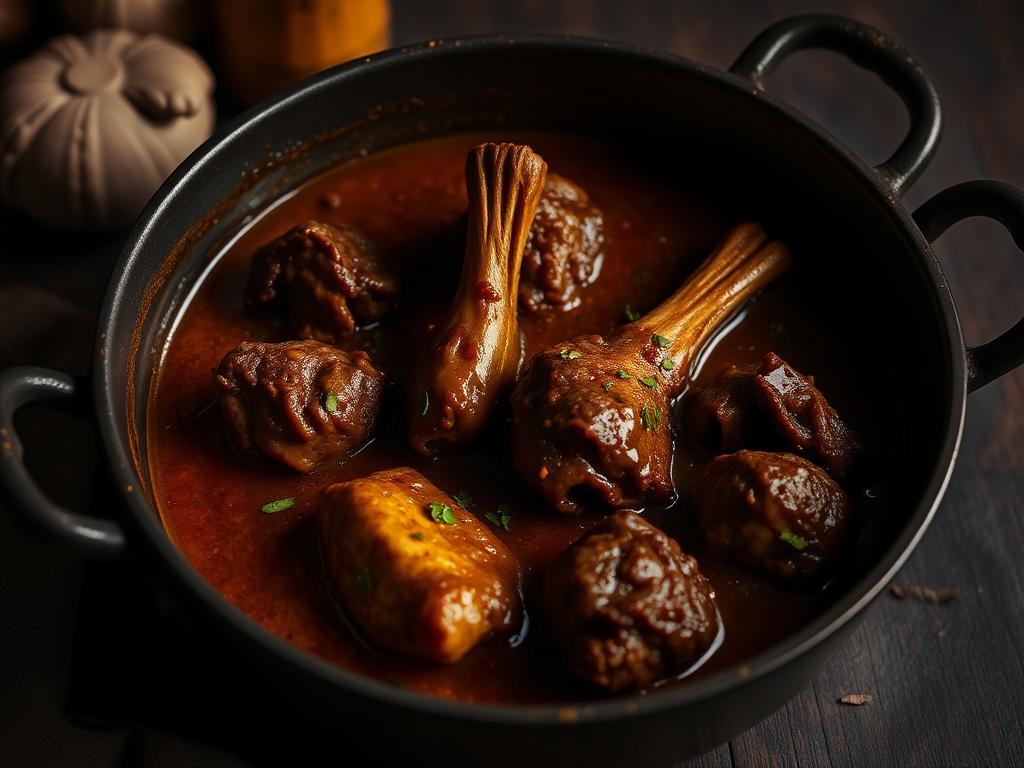
Khudi is the quintessential Sunday curry of the East Indian Catholic community of Mumbai, particularly those from Vasai, Uttan, and Bandra. Its deep mahogany color and complex heat come from the 'Bottle Masala', a secret blend of up to 30 spices sun-dried and pounded in glass bottles. It is a thin yet rich gravy, traditionally made with goat meat and potatoes, reflecting the community's agrarian and coastal roots.
Ingredients
The Meat and Marinade
- 1 kg Mutton (goat meat), curry cut with bone
- 1 tsp Salt
- 1/2 tsp Turmeric powder
- 1 tbsp Ginger-garlic paste
The Base
- 3 tbsp Vegetable oil
- 4 Large onions, finely sliced
- 2 Large potatoes, peeled and quartered
- 2 tbsp East Indian Bottle Masala (authentic)
- 1 tbsp Tamarind pulp
- 1 sprig Curry leaves
- 500 ml Hot water
- Fresh coriander for garnish
Method
- 1
Marinating the Mutton
Rub the cleaned mutton pieces with salt, turmeric, and ginger-garlic paste. Allow it to rest for at least 30 minutes at room temperature. This helps the meat fibers soften and absorb the base aromatics.
- 2
Searing the Potatoes
Heat oil in a heavy-bottomed pressure cooker or handi. Fry the quartered potatoes over medium heat until they develop a light golden crust. Remove and set aside; frying prevents them from disintegrating in the long simmer.
- 3
Caramelizing Onions
In the same oil, add the sliced onions. Sauté on medium-low heat for 12-15 minutes, stirring occasionally, until they turn a deep translucent brown. Do not burn them, as bitter onions will ruin the delicate balance of the bottle masala.
- 4
Browning the Meat
Increase heat to medium-high and add the marinated mutton to the onions. Sear the meat for 8-10 minutes, stirring constantly until the pinkness disappears and the juices start to lock in. The meat should look slightly browned on the edges.
- 5
Adding the Bottle Masala
Lower the heat and add 2-3 tablespoons of East Indian Bottle Masala. Stir rapidly for 2 minutes to cook the spices. If the masala sticks to the bottom, splash a teaspoon of water. The aroma should be pungent and earthy.
- 6
Pressure Cooking
Add 500ml of hot water (never cold, to avoid toughening the meat) and salt to taste. Close the pressure cooker and cook for 4-5 whistles, or until the mutton is 80% cooked. If using a pot, cover and simmer for 45-50 minutes.
- 7
Incorporating Potatoes
Release the pressure and open the lid. Add the fried potatoes and the tamarind pulp. The tamarind provides the 'sour' note essential to balance the heat of the 30-spice blend.
- 8
Final Simmer
Simmer uncovered on low heat for another 10-12 minutes until the potatoes are fork-tender and the gravy achieves a thin but slightly oily consistency (the 'tari'). Check the seasoning and adjust salt if necessary.
- 9
Resting the Curry
Turn off the heat and garnish with fresh coriander and a few curry leaves. Let the curry rest for at least 20 minutes before serving. Like most Indian stews, the flavors deepen and mature as it cools slightly.
Notes & variations
- If you don't have Bottle Masala, substitute with a mix of Kashmiri chili powder, roasted cumin, cinnamon, cloves, and black pepper, though the flavor won't be authentic.
- Ensure the mutton is 'curry cut' (small 1.5 inch pieces) for even cooking.
- Leftover Khudi tastes even better the next day as the spices permeate the potatoes.
- Tamarind can be replaced with 2-3 dried Kokum petals for a sharper, coastal tang.
Serve with
Serve with East Indian Fugias (deep-fried bread balls) or simple steamed Basmati rice.
Cook's note
Always use hot water when adding liquid to the meat to ensure the protein stays tender and doesn't seize up.