Khashir Chaap
Slow-cooked mutton ribs in a rich, spicy, oily Mughlai gravy.
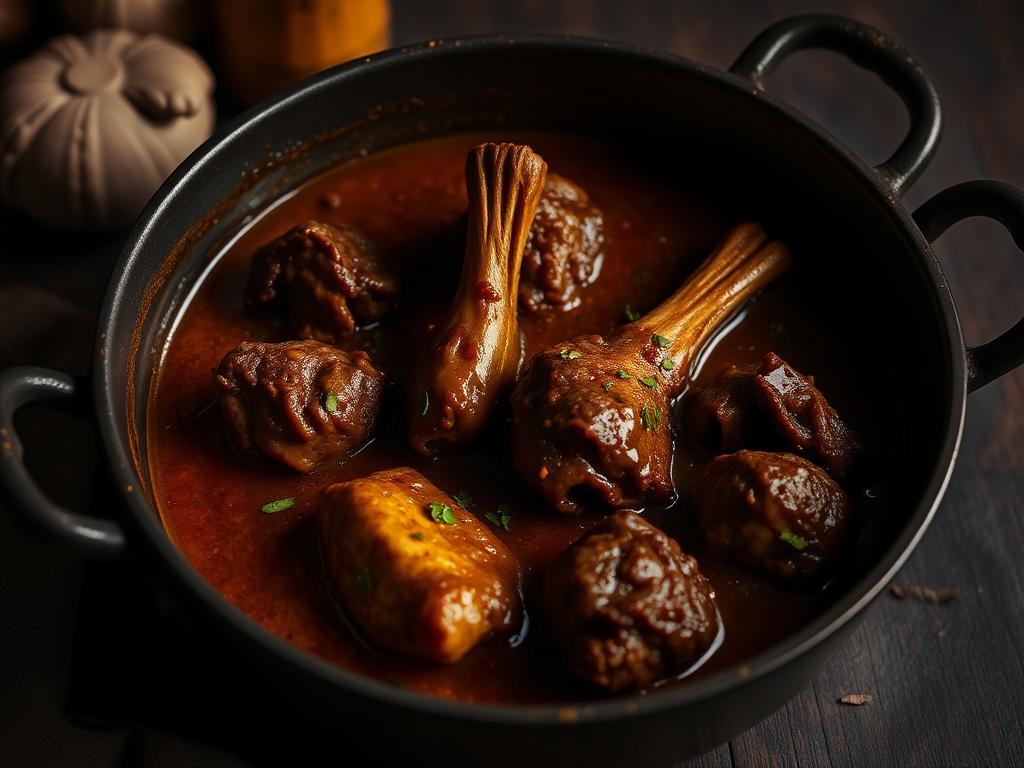
About this dish
Khashir Chaap is a celebratory Mughlai-Bengali dish, famously served in the old eateries of Kolkata. It features flattened mutton ribs slow-cooked in a heavy-bottomed shallow copper 'Lagni'. The dish is characterized by its thick, grainy gravy (danedar) and a visible layer of flavored oil (tari), representing the pinnacle of slow-cooking technique.
Ingredients
The Mutton and Marinade
- 800 g mutton rib chops (chaap cuts), flattened with a mallet
- 1/2 cup thick hung curd (yogurt)
- 2 tbsp ginger paste
- 2 tbsp garlic paste
- 1 tbsp raw papaya paste (with skin, for tenderizing)
The Spice Paste
- 2 tbsp cashew nut paste
- 1 tbsp poppy seed (poshto) paste
- 1 tsp shahi garam masala powder
- 1 tsp Kashmiri red chili powder
- 1/2 tsp mace (javitri) and nutmeg (jaiphal) powder
The Cooking Medium
- 1/2 cup ghee (clarified butter)
- 2 drops Meetha Atar (edible perfume)
- 1 tsp Kewra water
- Salt to taste
- 1 tbsp saffron-infused milk
Method
- 1
Meat Tenderizing
Place the mutton chops between parchment paper and flatten them gently with a meat mallet. Marinate with raw papaya paste, ginger, garlic, and salt. Let this rest for at least 4 hours (or overnight in the fridge) to ensure the tough rib meat becomes butter-soft.
- 2
Second Marinade
Whisk the hung curd with Kashmiri chili powder, cashew paste, and poppy seed paste. Rub this mixture thoroughly over the pre-marinated mutton. The poppy seeds and cashews are essential for the 'danedar' (grainy) texture of the final gravy.
- 3
Initial Searing
Heat the ghee in a wide, flat-bottomed heavy pan (or a 'Lagni'). Place the mutton pieces in a single layer. Sear on high heat for 3-4 minutes per side until the edges start to brown and the moisture from the yogurt begins to release.
- 4
Slow Cooking (Dum)
Lower the heat to the absolute minimum. Cover the pan with a very tight-fitting lid (you can seal it with dough for a true 'dum' process). Let the mutton cook in its own juices and the marinade for 45-60 minutes, checking every 15 minutes.
- 5
Bhonno (Frying the Masala)
Once the meat is 80% cooked, remove the lid. Increase the heat to medium and start the 'bhuna' process. You must stir and flip the meat constantly as the yogurt and nut pastes start to caramelize and stick to the meat.
- 6
Developing the Grain
Continue cooking until the ghee separates completely and floats to the top. The gravy should look thick, brown, and speckled. If the masala looks too dry, sprinkle a few drops of warm water, but never add enough to make it a thin sauce.
- 7
Adding Aromatics
Stir in the mace-nutmeg powder and shahi garam masala. These volatile spices are added late to preserve their scent. Add the saffron milk and stir gently to incorporate the golden hue into the rich brown gravy.
- 8
The Mughlai Finish
Add the Meetha Atar and Kewra water. These provide the 'restaurant-style' aroma typical of Kolkata Mughlai cuisine. Turn off the heat and keep the pan covered for 10 minutes to allow the scents to penetrate the meat fibers.
- 9
Final Texture Check
The meat should be 'falling-off-the-bone' tender, and the gravy should be a thick coating (masala-dar) rather than a liquid curry. The oil on top is intentional and carries all the spice extracts.
Notes & variations
- Raw papaya paste is non-negotiable for mutton ribs; it breaks down the connective tissue.
- Use a wide pan; overcrowding causes the meat to boil rather than fry/sear.
- Meetha Atar is very potent; one drop too many will make the dish soapy and inedible.
- If you don't have poppy seeds, increase the cashew count, though the texture will be smoother.
Serve with
Traditionally served with Biryani, Rumali Roti, or a soft Mughlai Paratha.
Cook's note
For an authentic touch, use a heavy iron skillet; it helps in the slow caramelization and gives the gravy a deeper, darker color.